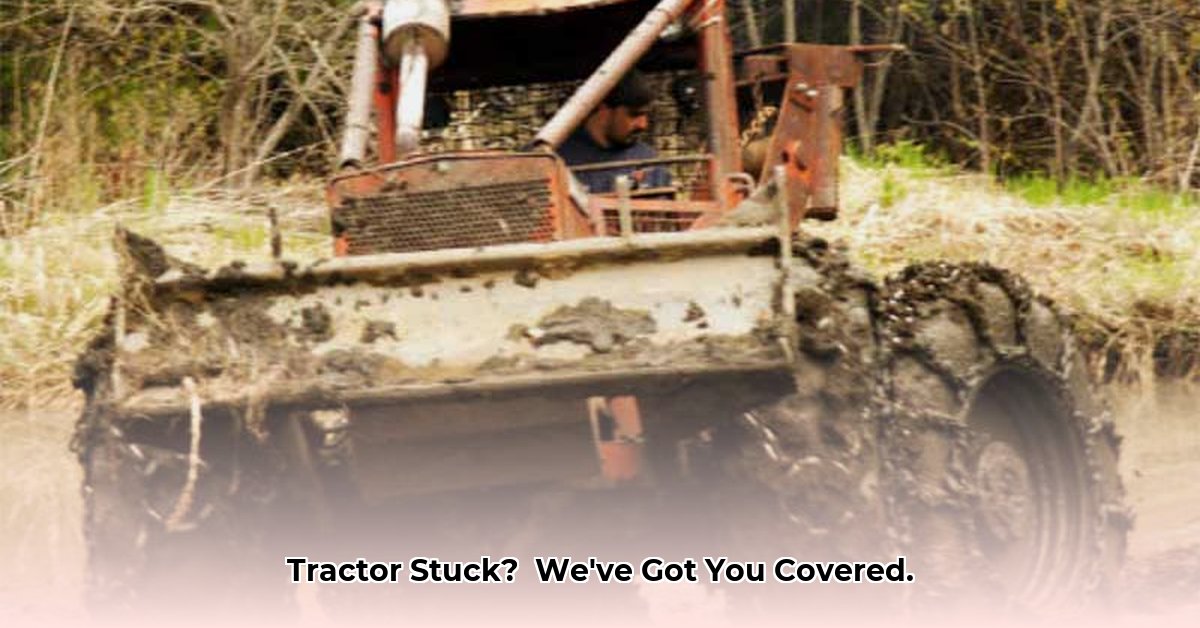
Getting your tractor stuck in mud is a frustrating and potentially dangerous situation. This guide provides a step-by-step approach to safe and efficient tractor extraction, emphasizing preventative measures and when to call for professional help. This is crucial for maintaining productivity and ensuring farm safety. For optimal traction, consider adding water to your tires.
Pre-Extraction Assessment: A Crucial First Step
Before attempting any recovery, a thorough assessment is critical. This is far more than just a quick glance; it’s about understanding the variables that determine your best course of action and minimizing the risk of further damage or injury.
1. Determine Tractor Weight: Consult your owner's manual for the exact weight of your tractor. This is fundamental to calculating the minimum pulling power required.
2. Analyze Soil Conditions: Observe the mud's consistency. Is it thick clay, loose silt, or something in between? The type of mud significantly affects the resistance you'll encounter. Thick clay poses a considerably greater challenge than looser, sandier mud. Consider the moisture content as well; saturated soil offers substantially less support.
3. Evaluate Available Resources: Inventory your recovery equipment. Do you have heavy-duty recovery straps, a winch (and is it powerful enough?), or another tractor available for assistance? Assess the quality of your equipment; worn straps or a faulty winch are safety hazards.
4. Identify Potential Hazards: Look for potential dangers like ditches, slopes, or overhead power lines. A preemptive safety check is crucial to prevent accidents. Consider the proximity of bystanders and their safety zone in relation to the extraction process.
5. Calculate Minimum Pulling Power: Use the following formula to estimate the minimum required pulling power:
Minimum Required Capacity = W + ARR + AGR
Where:
- W = Weight of the tractor (in pounds or kilograms).
- ARR = Added Resistance from Rolling Resistance (estimated as a percentage of W; this percentage dramatically increases with softer mud, potentially reaching 50% or more for very soft mud).
- AGR = Added Resistance due to Ground Angle (this adds to the required pulling power if the tractor is stuck on a slope).
Safe Extraction Techniques: Methods for Recovery
The best method depends on your assessment. Here are three common techniques:
Method 1: Winch Extraction (Best for situations with a sturdy anchor point)
- Secure Anchor Point: Choose a strong, immovable anchor point (a sturdy tree, a post firmly set into the ground, or a vehicle with sufficient holding capacity).
- Attach Recovery Straps: Securely fasten heavy-duty recovery straps to both your tractor and the anchor point. Ensure the straps' capacity significantly surpasses the calculated minimum required pulling power.
- Engage Winch Slowly: Begin winching slowly and steadily. Constant monitoring is crucial to detect any signs of strap wear or failure. Immediate cessation is necessary if anomalies occur at any point.
- Post-Extraction Inspection: After successful extraction, carefully check the straps and attachments for any damage. Replace worn or damaged components without delay.
Method 2: Tractor-Assisted Extraction (Best when another tractor is available)
- Secure Connection: Attach a strong tow strap to both tractors, ensuring a secure and reliable connection. Clear communication between drivers is essential throughout the process.
- Slow and Steady Pulling: The assisting tractor should pull slowly and steadily. Avoid jerky movements which can cause damage or worsen the situation.
- Communication is Key: Constant communication between the drivers is essential, with one driver guiding the movement while the other operates the assisting tractor.
Method 3: Plank Method (Best for less severe situations and soft mud)
- Create a Runway: Gather sturdy planks of wood or thick boards and place them under the drive wheels to provide a solid base. Extend the planks well beyond the muddy area.
- Gentle Movement: Drive slowly and cautiously over the planks toward solid ground. Proceed gradually, monitoring the stability of the planks and the tractor's progress.
Safety Precautions: Regardless of the method, safety is paramount. Never position yourself directly in the line of a winch cable. Keep clear of moving parts, and wear appropriate safety gear.
Post-Extraction Procedures and Preventative Measures
After rescuing your tractor, conduct a thorough inspection for damage to both the tractor and recovery equipment. Perform any necessary repairs or replacements immediately. Regular maintenance is crucial for preventing future incidents. Maintaining correct tire pressure, particularly in wet conditions even before a potentially problematic situation, is vitally important. Also consider the weight distribution across your tractor and ensure it is balanced and appropriate.
Preventative measures include improving drainage in problem areas, choosing appropriate routes, and regularly inspecting tire pressure. Proactive measures are typically substantially less time-consuming, less expensive and avoid potential damage.
When to Call for Professional Help
If self-extraction proves impossible or unsafe, don’t hesitate to contact a professional recovery service. Attempting risky maneuvers could lead to increased damage or injury. The additional cost of professional assistance far outweighs the risk of attempting to extract the tractor independently when beyond capability.
Conclusion: Prioritizing Safety and Efficiency
Getting a tractor unstuck from mud requires careful planning, appropriate equipment, and safe execution. Remember that prevention is key, but knowing the best methods for rescue and when to call for professional help is crucial for maintaining a productive and safe farming operation. Prioritizing safety alongside efficiency safeguards both your equipment and your well-being.